
Modern technology permeates almost every facet of our lives, shaping our day-to-day in ways both subtle and obvious – and indeed in ways we probably never anticipated. Just imagine the horror of going without your smartphone or internet connectivity for a few days. How else would you plan your route, decipher star constellations, order the weekly food shop – or keep in contact with your loved ones?
As more of our lives have shifted into the digital realm, so have our relationships. These days, we probably message our friends and family more than we communicate with them face-to-face. In a way, technological advancements are transforming not only how we work, learn or travel, but they’re also changing us on the inside – how we think, behave and feel.
Many of those changes may go unnoticed amid the rush of daily life. However, surely you sometimes stop to think how technology, particularly the advent of the internet, has affected us socially – and what it actually means to be social. Is technology – or, rather, our love affair with it – helping or hindering our sense of connection to other people? Why do so many people – despite living in a world where connecting with other people has never been easier – find themselves longing for commitment or a trusted confidant?
Indeed, loneliness is now more common than ever. It has even been declared a ‘global public health concern’, with research showing that it can harm people’s health as much as smoking. In the UK, for example, 26 million people report feeling lonely. In other words, if you’re feeling lonely, you’re definitely not alone.
Artificial affection
There is a strong chance that you already live with some form of conversational artificial intelligence (AI) such as a virtual assistant like Alexa or Siri. But technology is progressing faster than ever and AI is increasingly ready to help you deal with more nuanced and existential needs than checking the weather forecast or switching on the lights for you.
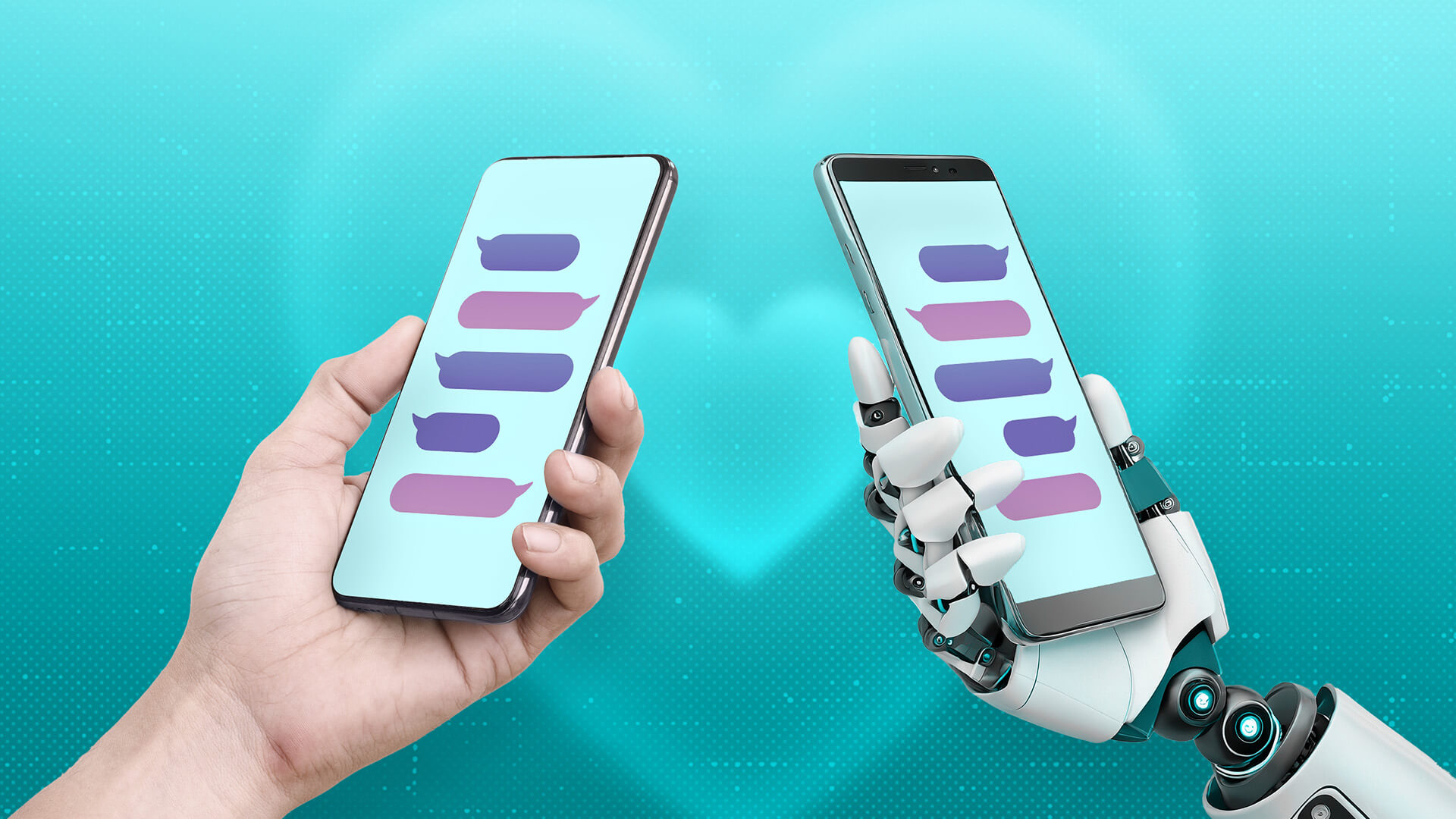
Recently, the world has been enchanted by ChatGPT and other chatbots of its ilk. As our interactions with technology become increasingly personalized to the point of challenging the traditional concepts of companionship, you cannot help wondering if AI with its revolutionary potential in many walks of life can also provide the much-needed support – and even be the cure for loneliness. Could AI substitute genuine human interactions, rather than ‘just’ augment or complement human needs and capabilities?


The wider shifts in communication and AI’s seeping into seemingly ever more aspects of our lives have definitely primed our acceptance and ease into AI companionship – you have all of the messages, banter and friendly support you require online without needing to step out the house. And, there’s none of the guilt for responding late, none of the feelings of social awkwardness of approaching new people out ‘in the real world’, and none of the worries about being a ‘bad friend’ for not asking about their life updates.
What’s not to like? Apparently many of us are already sold on the idea. A recent survey of the UK public found that over 70% of the participants believe that AI chatbots can be key players in reducing loneliness, with over 50% participants stating that they believe the development of this AI technology can significantly improve quality of life. The potential of using AI to support individuals struggling with loneliness is an extremely exciting prospect.
Your AI lover
Before jumping on the AI companion bandwagon, however, we need to further understand the impact on ‘real life’ social interactions that this new technology creates, the serious ethical issues that may come up, as well as any potential privacy and security threats and other risks that embracing an AI companion may entail.
Let’s briefly look at some of the pros and cons that developing a “relationship” with an AI companion can entail.
The upsides of AI companionship
- 24/7 availability: Your AI companion has no other commitments (unsurprisingly), so they are available round the clock, providing companionship and support whenever needed. For example, this would be perfect if you live alone and want someone to rant about your day with in the evening. Or, if your normal routine doesn’t surround you with the stimulating human interaction and support you’d want – there is only so much depth a passing ‘hi’ to the cashier can bring.
- Non-judgmental interaction: We all have difficulty in sharing some parts of our lives with others. While opening up can greatly strengthen relationships ‘in real life’, we can express ourselves freely without fear of judgement and criticism with an AI companion.. If you’re shy or maybe have a bit of a niche hobby or interest, an AI companion acts as a solid soundboard to share your feelings and ideas.
- Customized experiences: AI companions can be tailored to meet individual preferences – you can even have a companion designed to mimic your favorite influencer or celebrity! With this personalization, you can design your AI companion to have similar interests to you, and therefore help feed your passions with additional excitement and ideas – perfect if you need a little more support to finish your first novel or put on those gardening gloves.
The downsides of AI companionship
- Lack of genuine emotion: While AI companions can simulate emotions and empathy, they lack the genuine emotional understanding and depth that human relationships offer. This can result in a superficial connection that may not fulfill your emotional needs. Your AI companion will never be able to compare or relate your life experiences to their own – they have none! So, quite simply, they sometimes just might not ‘get it’.
- Ethical concerns: Of course, wherever personal data is shared, consent, privacy, and the potential for exploitation must be carefully considered. As AI companionship models continue to grow, so must the vigilance in ensuring that the information shared is secure and private.
- Dependency risks: Reliance on AI for companionship may lead to social isolation and hinder the development of meaningful human connections. Over time, you may become dependent on your digital confidant and feel less need to socialize ‘in real life’. When you’ve refused Sunday lunch with your friends for the seventh week in a row, this might put your actual face-to-face relationships at risk.
- Limited understanding: AI companions may struggle to understand the complexity of human emotions and context – let’s be honest, many humans struggle with this too. This might lead to responses that aren’t quite so helpful. For example, if you’re looking for someone to moan to about your day and your AI companion responds with more logic than compassion, it might make you feel even worse!
How safe is AI companionship?
Several risks involving AI companionship spring to mind:
- Privacy concerns: AI companionship creates an environment where plenty of personal information that you might not typically trust a stranger with, is shared. Without proper privacy and data protection, this shared information makes you a target for cybercriminals. Think about it – if you share with your AI companion, your birthday, the name of your childhood pet or favorite food, the chances of whoever gets access to that data of being able to guess your passwords magnifies, putting you at greater risk of identity theft and fraud.
- Exploitation: As AI advances, cybercriminals may find opportunities to exploit users of AI companionship for harmful purposes. For example, they might encourage you to transfer them money, spread misinformation or mix with people with malicious intent.
- Invasion of personal space: AI companion programs that use cameras or microphones for interaction may inadvertently invade your privacy if not properly safeguarded. We all would hate to think our private conversations are being listened to. If any of this data gets into the wrong hands, it could provide everything a cybercriminal needs for blackmail or identity theft.
Creating a safe space for AI companionship
AI companionship offers a new and certainly exciting approach to addressing our human need for connection and support. It has the potential to greatly reduce loneliness, and with its ability to learn from its interactions, AI companionship can even go on to specialize in interacting with those suffering from mental health or communication difficulties.
However, there is no ‘one size fits all’ solution, and everyone could respond differently to the same message, especially when they can’t see their companion’s body language to indicate tone or deeper meaning.
If you’re diving into the world of AI companionship, be mindful of the personal information you share, take sufficient security safeguards to protect your data together with a balanced consideration of the messages and information received, and report anything that seems suspicious. Who knows what the future of AI will bring? But as it continues to develop, we all must stay vigilant in safeguarding the new security and wellbeing concerns that innovation may bring.
Before you go: Your voice is my password